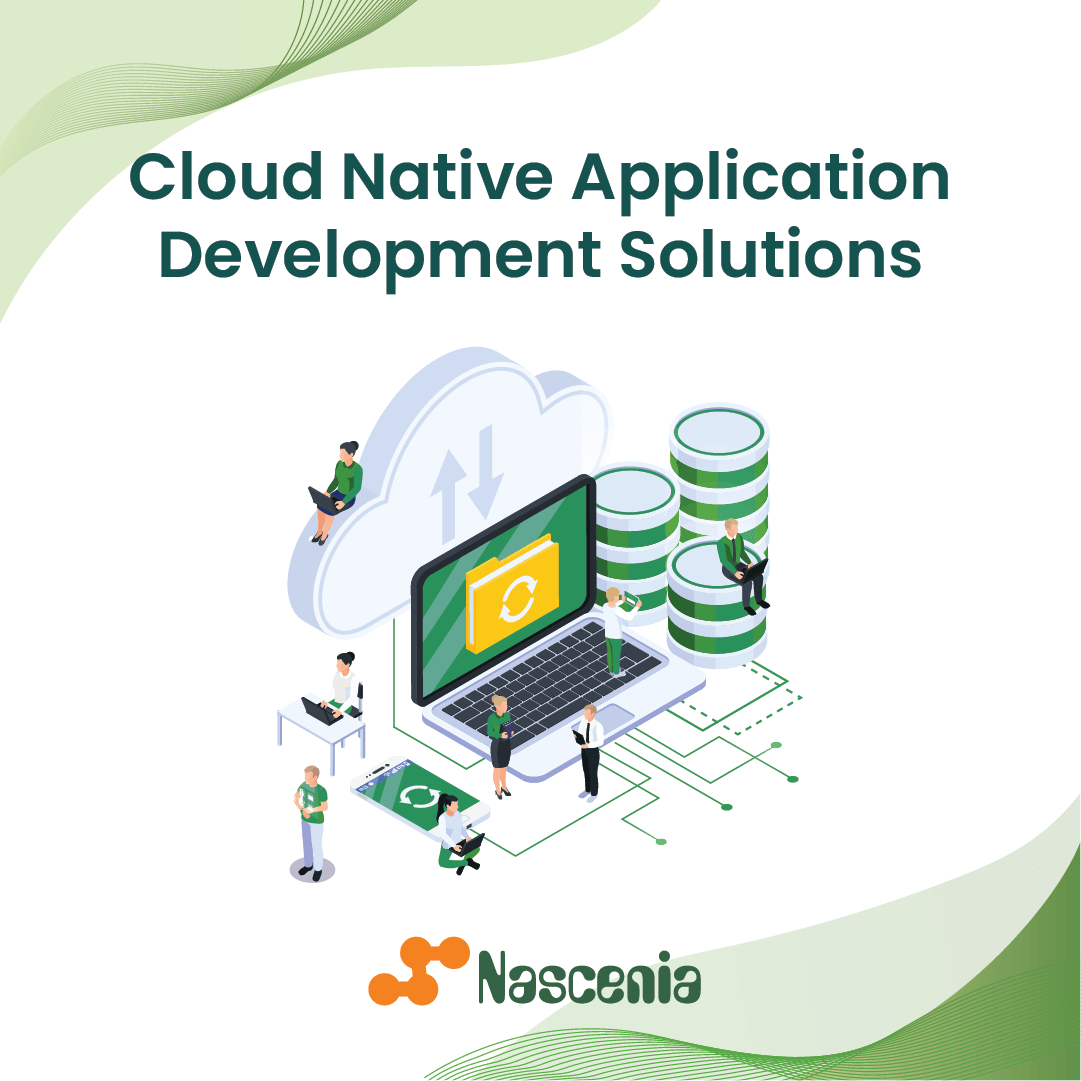
In modern times, developing highly scalable, resilient, and flexible applications is crucial. Companies must update quickly to satisfy customers. Custom Cloud native application development is the answer to that question. It is an approach in which software is built, managed, and deployed in a cloud computing environment. Apps are developed on the cloud infrastructure using modern tools and technology. Cloud-native applications can be changed quickly and frequently without impacting service delivery, giving developers a competitive and innovative edge.
Cloud Native Development Services
Cloud-native development services are provided at many different levels worldwide. Since the cloud solution revolutionized SMB’s operations, most new projects are now based on the cloud. Experts believe that 66% of companies are already considering going cloud-native. In the next 6-12 months, 55% of apps will be built with cloud-native architecture. Considering the data, we have managed to list the cloud-native services worldwide.
Here are some of the most sought-after cloud-native services:
Consulting and Advisory Services
Cloud native consulting and advisory services include everything that will help you to decide your next step to build your dream project. From evaluating your current architecture to creating a roadmap for you to migrate to cloud native. The consulting and advisory services will help you to take an educated decision on the future of your project.
Microservices Architecture-based App Development
Microservice architecture-based app development lets you build a resilient, efficient, and flexible app. Your project will be divided into small components, each with a distinct task. This way, your app will be easy to update and will not crash even if a single component fails. Microservices ensure that your app is seamless and user-friendly.
Monolithic App Modernization
With app modernization, you can leave your Monolithic (legacy) app behind. This helps businesses become cost-efficient. Cloud-native software is easily scalable, so your app will be more user-friendly. It will also modernize the outdated components for efficiency and a breezy user experience.
Cloud Infrastructure and Migration Services
Cloud Infrastructure and Migration services help you move your databases, applications, and VMware to the cloud. This will make your business cost-efficient and your app scalable in the long run. Developers use tools like Microsoft Azure to migrate data from servers to the cloud.
Cloud Native DevOps Services
Harness the power of DevOps and automate your delivery pipelines. Services like Continuous Integration (CI) and Continuous Deployment (CD), Containerization, automated incident response etcetera will make your project smooth, seamless, and user-friendly.
Containerization and Orchestration
Developers use tools like Kubernetes and Docker to containerize and Orchestrate your software. Containerization and Orchestration help your app to automate deployment, scale, load balancing etc to optimize your resource usage and high availability of your app.
Monitoring and Support Service
Monitoring and Support services help you to keep your project smooth. With a comprehensive support and monitoring service, you will be able to monitor your system health, analyze the metrics of performance, and troubleshoot issues in real-time. This will help you to maintain a smooth user experience and optimal uptime for your application.
Cloud Native Stacks and Their Use Cases
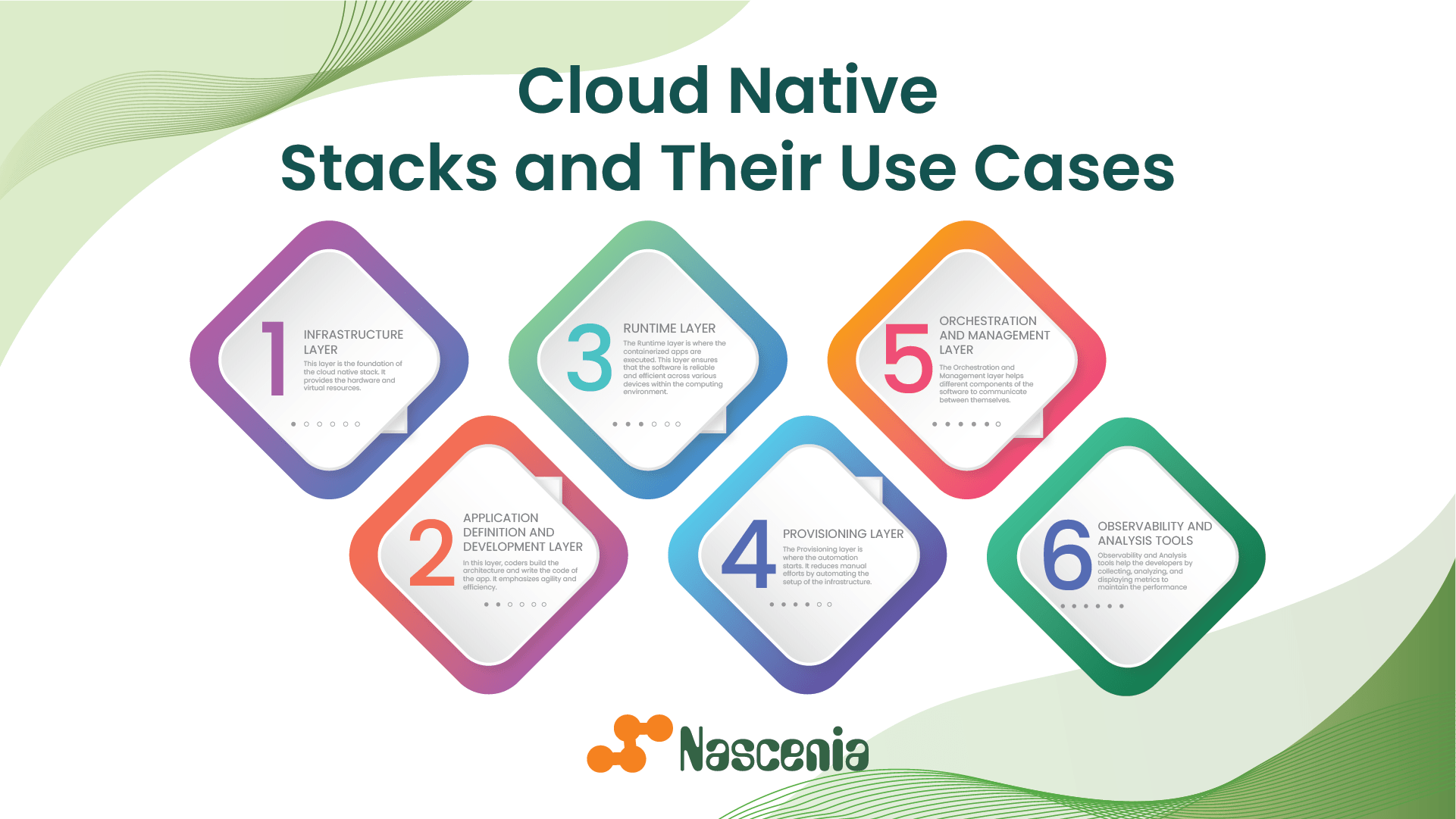
Cloud Native Stacks are the backbone of this scalable and efficient architecture. This is used to describe the layers of cloud native technologies programmers use to develop, manage, and execute programs.
Here are the layers that compose a cloud native application:
Infrastructure layer
This layer is the foundation of the cloud native stack. It provides the hardware and virtual resources. The infrastructure layer is critical for handling the unique workloads of cloud-native as it supports scalability and resilience. It consists of critical resources such as operating systems, storage, and computing resources which are managed by third-party CSPs.
Application Definition and Development Layer
In this layer, coders build the architecture and write the code of the app. It emphasizes agility and efficiency. Developers use tools to handle packaging, deployment, and configuration for a seamless development process. For example, developers use tech such as databases, containers, CI/CD tools etc to create a cloud native application.
Runtime Layer
The Runtime layer is where the containerized apps are executed. This layer ensures that the software is reliable and efficient across various devices within the computing environment. It starts by providing containers to function. It comprises networking capability, cloud data storage, and a container runtime.
Provisioning Layer
The Provisioning layer is where the automation starts. It reduces manual efforts by automating the setup of the infrastructure. It allocates and configures the cloud environment which results in speeding up the provisioning process while also allowing quicker deployment.
Orchestration and Management Layer
The Orchestration and Management layer helps different components of the software to communicate between themselves. It uses tools like Kubernetes to oversee containerized services while simplifying scaling, app management, and deployment. It integrates all the components to create a program that functions as a single unit.
Observability and Analysis Tools
Observability and Analysis tools help the developers by collecting, analyzing, and displaying metrics to maintain the performance and health of a cloud native application. It offers data for real-time monitoring and troubleshooting. To ensure the software’s service quality, developers monitor memory, latency, and CPU usage so that there are no disruptions. These tools also evaluate, monitor, and improve the health of your cloud-native app.
These cloud native stacks ensure that your applications are always flexible, agile, resilient, and future-proof. These stacks are critical to transformative digital innovation.
Benefits of Cloud Native Apps
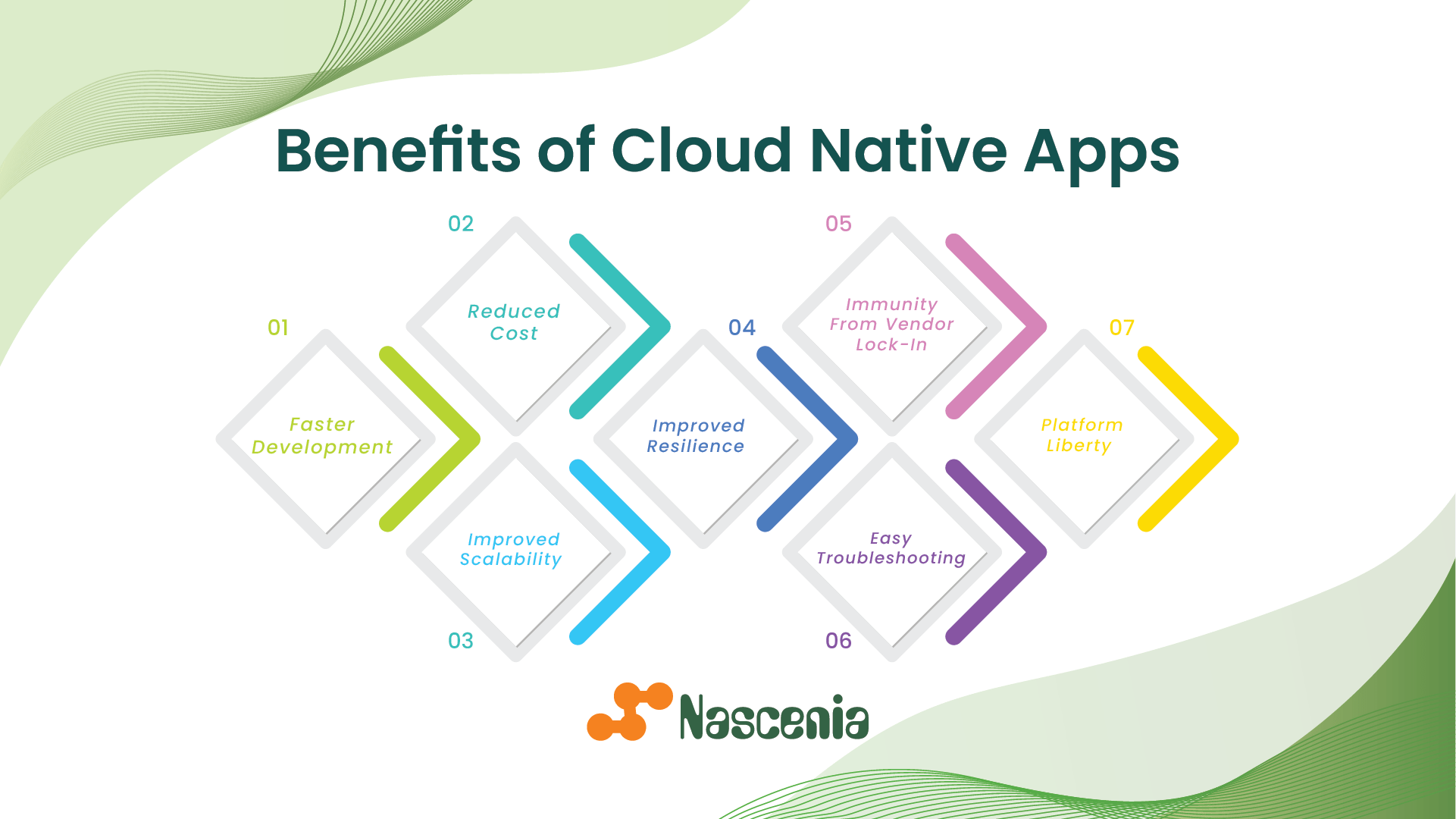
Cloud-Native applications drive business growth and digital transformation. This approach prepares your system for the present and future. It is less risky and more efficient than other methods. These software are efficient, cost-effective, and most importantly easily maintained and updated by continuous integration and continuous deployment (CI/CD).
Here are some of the other benefits of Cloud Native Applications:
Faster Development
Cloud Natives are hosted on cloud servers with an agile development process. The programmers do not need to maintain servers and can build ready-to-deploy containerized apps along with DevOps practices. This allows developers to make quick changes. For instance, these softwares can be updated daily without shutting them off.
Reduced Cost
Cloud native applications do not need to invest too much on the servers as they host the app on cloud. Also, they are horizontally scalable. So, you only pay based on usage, there are no idle costs. If your app has a traffic spike only in a certain period, you will pay for that. You do not have to invest on servers that will lay idle for most of the time.
Improved Scalability
Cloud native apps are hosted by the CSPs. They provide elastic scalability for your applications. This ensures your app will perform consistently in every situation. If you have fluctuating demands, CSP will ensure that your app is consistent in peak loads, idle state, or sudden surges in traffic. The robust architecture will reduce downtime significantly and help you scale on demand.
Improved Resilience
Cloud native architecture ensures that the applications have increased resilience. They use microservices which can be isolated. These apps are designed to be fault-tolerant and continue to function if one or more components crashes. Compared to monolithic software where one component failure can crash the whole software, cloud natives are much more resilient.
Immunity From Vendor Lock-In
Because these apps use containers to transfer packaged microservices between infrastructures of different cloud service providers. Your organization will not be tied to any particular vendor. This gives you the freedom to do ‘trial and error’ to select the best match for your project.
Easy Troubleshooting
Cloud native application development makes troubleshooting easier due to its microservices architecture. It is easier to find and fix bugs within microservices without any server downtime.
Platform Liberty
Developers do not have to stress about the compatibility of the hardware. Since the cloud providers take care of the backend, there are questions of incompatibility regarding hosting and hardware. Therefore, the developers can concentrate on delivering a seamless app rather than worry about the underlying infrastructure.
Cloud Native Application Development Process
Cloud-native application development has changed the way we build apps. These applications use Microservices as a building block in order to use the modern cloud deployment models. Microservices divide the app into different parts. These parts are loosely coupled and work independently. They communicate within themselves by the APIs. The Microservices then, are packaged in a container. Containerization helps Microservices to be in a self-contained environment with their code, resource files, System tools and libraries. This way, they can perform consistently and independently under any circumstances. The Cloud Native Architecture combines all these components to create a highly scalable and efficient application.
Cloud Native Application VS Monolithic Applications
Why Monolithic Applications are Obsolete
The traditional approach of monolithic app building is becoming obsolete day by day. Since this method uses one codebase consisting of all the functionalities of the app, it is a huge problem for coders. For example, suppose an application like Instagram was developed with a monolithic approach. It would mean that all of its different components would be meshed together in a single codebase. Texting, Marketplace, Photos, and everything else meshed in a single codebase would be a nightmare for any programmer.
This makes programs clunky and hard to manage. Moreover, bugs are harder to find in this large codebase. Also, a large codebase is understandably harder to comprehend which makes the development slower. It can also have issues with fault tolerance and failure recovery. All these drawbacks make cloud-native architecture more attractive to modern programmers.
Why Cloud Native Applications are Better Than Monolithic Applications
The traditional monolithic approach is not suitable for robust modern applications with multiple functionalities. On the other hand, cloud native applications are smaller, faster, and more efficient. The division of components makes it easier for coders to manage and maintain. Furthermore, these apps are more resilient. They are more fault tolerant and failure recovery is easier than monolithic programs.
The monolithic style can hinder a modern application in many different ways including migration. A large codebase means a complex data migration into microservices. Modern apps require a robust base where updates and fixes can be done rapidly. Cloud native applications are far easier to handle in this case.
Cloud Native Architecture Components
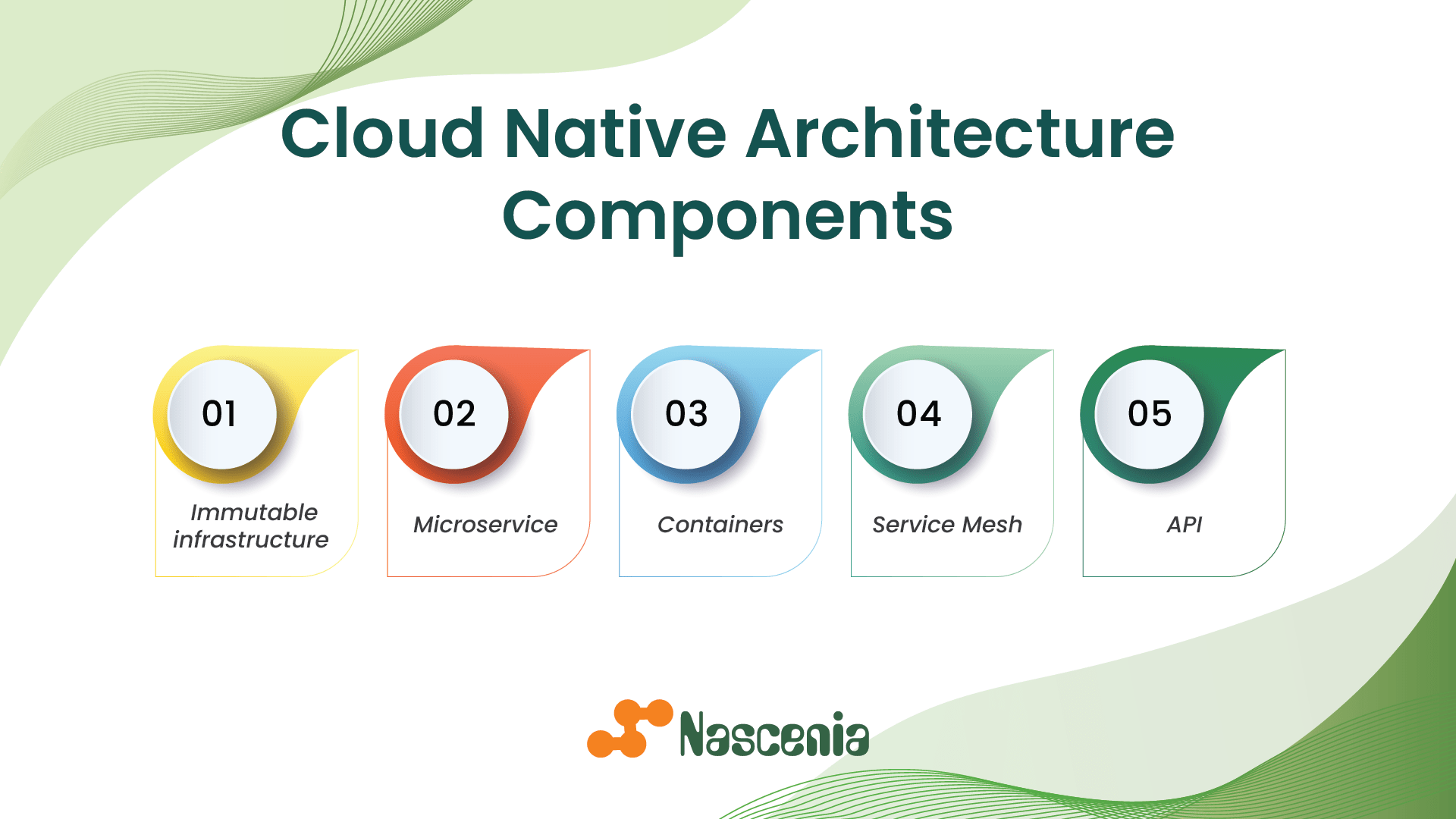
Cloud-native software is fast and nimble. These apps are made into small and composable pieces, making it easier to maintain, migrate, scale, or change the app based on user demand.
Here are some of the important components of cloud-native application development:
Immutable infrastructure
In cloud native, apps are hosted on remote servers. When any hardware needs to be updated, modified, or fixed; the servers are replaced rather than upgraded. Data is migrated into a new and high-performance server and incorporate the necessary changes. This creates a predictable cloud native deployment process.
Microservice
Microservices brought a revolution in cloud native app development. These are small and independent software components. Microservices work independently and are loosely coupled. They each have designated tasks which they perform. They communicate with each other and work as a complete cloud native application. Programmers can make changes into one microservice without hindering others. Moreover, even if one microservice crashes. Therefore, they can be scaled and updated independently without troubling the user.
Containers
Containers are a small but important part of a cloud native program. They package the microservice along with other required files such as system tools, resource files, and system libraries. They can perform consistently in any situation because of this. Since microservices are packaged with their dependencies, developers can deploy cloud native apps from anywhere. This means they can be deployed on cloud infrastructure, on premises, or on a hybrid cloud.
Each microservice is packed on a container and a group of containers work together to form a complete cloud native app. This group is called a system or stack. In a cloud native environment, a robust monitoring system automatically monitors each container. This includes starting and shutting down based on user demand. The dynamic monitoring system ensures greater scalability and efficiency.
Service Mesh
In cloud architecture, Service Mesh is a dedicated infrastructure layer that manages the communication between the microservices. Coders can use Service Mesh to add new functions to the application without writing new code in the application. For example, traffic management, security, monitoring and logging etcetera are provided through service mesh.
API
APIs facilitate standard and effective data transfer between microservices. They work as a communication tool between microservices for them to function as a complete cloud native app. APIs tell programmers what information the microservices want and the expected results. They do not suggest specific measures to achieve an outcome.
Big Businesses Who Use Cloud-Native Solutions
There are a lot of examples of cloud-native apps that are used in our daily lives.
Here are a few examples of popular apps.
Spotify
Spotify is probably the most popular music streaming platform in the world right now. To cater to its vast number of users consisting of millions of devices concurrently all over the world, it leverages container orchestration and cloud services. Spotify can scale based on user demand with cloud native technology.
Airbnb
The famous Bed & Breakfast services platform Airbnb is also built as a cloud-native application. It uses Amazon Web Services (AWS) as a cloud platform making it agile and resilient. AWS manages Airbnb’s app and website infrastructure. This gives Airbnb elasticity to scale its platform and manage resources making their payment and reservations convenient for developers and users.
Netflix
Netflix is probably the biggest platform that uses cloud native development. It is built on microservices and Kubernetes for orchestration. It also uses Docker for containerization. Using the cloud native approach, they can scale their infrastructure easily and release products quickly without hindering service.
Pinterest has over 200 million users and they scale their infrastructure using the cloud native technology. They also use Kubernetes and Docker for containerization and Dockerization. They have over 1000 microservices on their platform across their application for millions of different devices.
Challenges of Developing Cloud Native Software
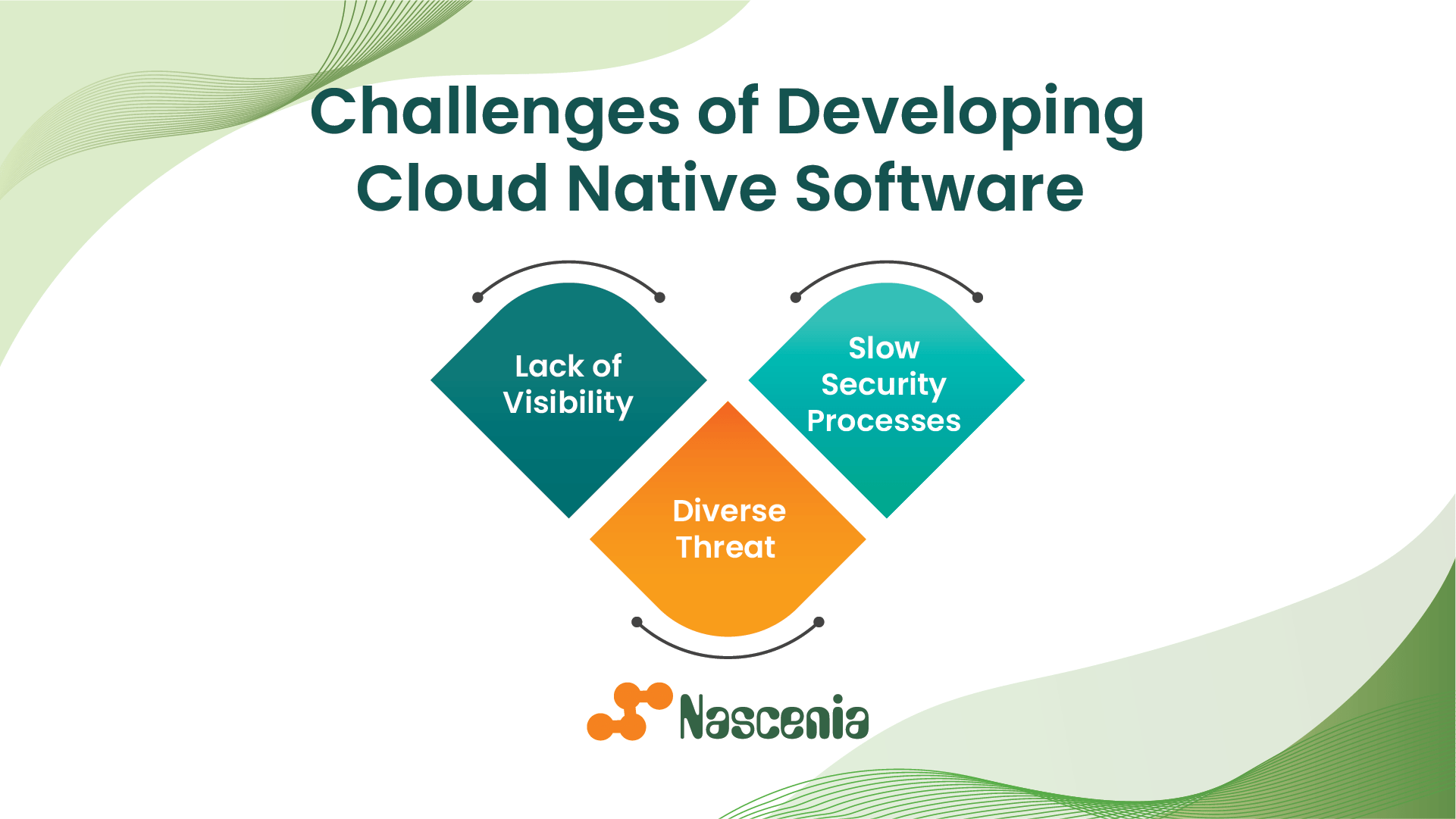
Cloud native architecture relies on different technologies due to their diversity.
Cloud native security is a very sensitive aspect of development. It requires a very specialized approach that will oversee the unique security concerns of cloud native architecture. This approach has different security concerns and measures than Cloud Security which is different from Cloud Native Security.
Here are some of the security risks of Cloud Native app development:
Lack of Visibility
Cloud Native apps are complex by nature. With different microservices and APIs, it is almost impossible to achieve complete visibility. Because of this, blind spots are created and security risks may arise.
Slow Security Processes
These programs are always in the process of CI/CD. This high-velocity process slows down the flexibility, speed, and agility of cloud computing making the security processes slower.
Diverse Threat
Cyber attackers find creative attack paths, backdoors, or workarounds to security solutions.
Conclusion
Cloud Native Application Development is a revolutionary practice in the web development sector. It is efficient, cost-effective, and most importantly, future-proof. The traditional monolithic approach is slowly but surely becoming obsolete.
Developers need to embrace the change of cloud computing and move towards either Cloud Native or Serverless software development. Cloud native apps are lightweight and efficient, highly scalable, and cost-effective. They are immensely beneficial compared to the challenges they possess.
There are a huge variety of services available on the market for cloud native app development. These services are both user and developer-friendly. They make the user experience very smooth. Similarly, they make the work of the programmers extremely simple. Automatic provisioning, deep support for APIs, CI/CD pipelines etcetera make cloud native applications a no-brainer choice for the developers.
More to Explore
The Quest for Knowledge Continues. Fuel Your Curiosity.