Custom BI software development getting popular for simplifying data processing, visualization, and decision-making. AI-powered business intelligence applications convert raw data into real-time insights. They help businesses to track trends, optimize operations, and take data-driven actions.
In this article, I’ll explain what BI applications are, how to develop them, and the impact of custom BI solutions on businesses.
Custom BI software Features to develop
Custom BI software development should include a range of features to enhance data analysis and decision-making, such as:
Reporting & BI Dashboards
Fully configurable, ad-hoc, and dashboard analytics deliver instant access to KPIs that support fact-based decision-making.
BI Data Warehouse Creation
Data Storage: Data integration is involved in creating an integrated data repository that could support heterogeneous and vast volumes of organizational data.
ETL Processes: ETL means Extract Transform and Load because this is the set of processes that are followed while getting the data to the data warehouse.
Data Governance: Some of the strategies for data governance are; policing for data quality, data security, and methods to enhance the compliance of data governance policies.
Data Visualization
Different charts, graphs, maps, and other objects crucial for data presentation are active in presenting consolidated information.
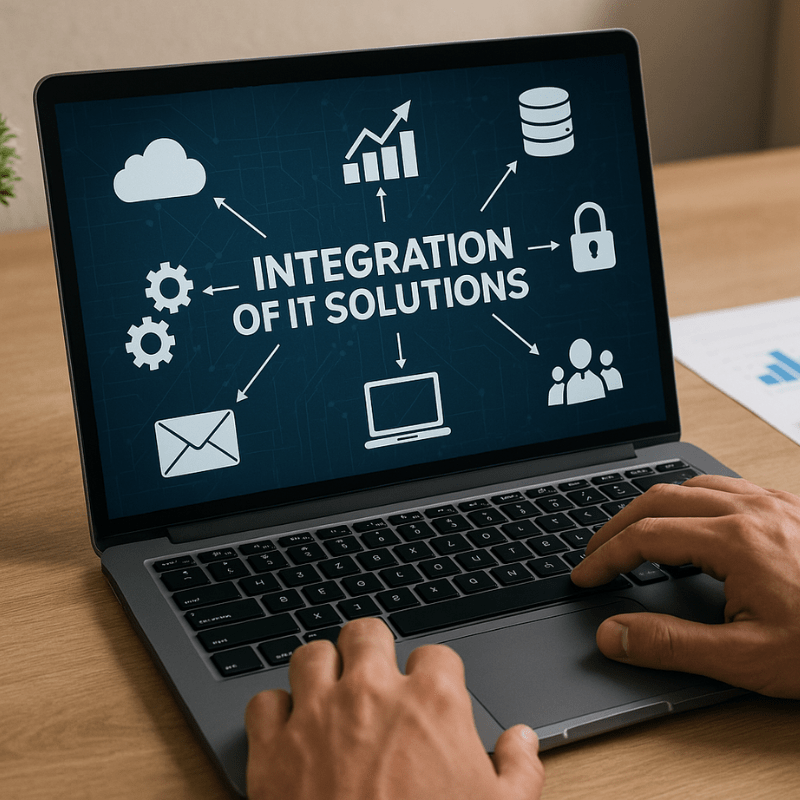
Integration Capabilities
This allows for integration with applications, databases, spreadsheets, and APIs, thus providing a single point of data view. It will guarantee data integration from separated systems, enabling the evaluation of business efficiency.
Business Intelligence Software Development Process
The development of a customized BI solution involves several key steps:
Requirement Gathering and Planning: This is the acknowledgment phase where a company has to comprehend future goals, define varied data sources, and plan the creation of a proper data model.
Platform Selection: It is essential to select the right type of BI platform. Relevant issues may include scalability, performance, cost, and ability. Some options are as follows: This option includes using Pentaho, an open-source solution. Others are paid for, such as Tableau and PowerBI.
Data Integration and Transformation: The essential processes include getting data from other databases, processing, and remodifying data into the best format for use. This involves pulling data from different systems, cleansing the data, and ensuring that data is in similar formats.
Dashboard and Report Development: Creating user-friendly dashboards and reports to present the company’s compelling KPIs and analytical data. This entails choosing the right kind of display options, determining the right format, and approaching methods of navigation.
Security and Access Control: Ensuring strong measures of security to prevent leakage of material. It involves the establishment of users’ identification, control of access, and protection of data as well.
Testing and Deployment: Introducing extensive testing for the BI solution to detect problems and eliminate them. After that, the testing stage is accomplished, and the solution is released to the production atmosphere.
Maintenance and Support: Maintaining and upgrading the solution for the constant delivery of results and as a result of increasing its efficiency.
Benefits of custom BI software Development
Customized for Specific Needs: Made to fit certain company needs and specifications.
Enhanced Data Security: Better protection of the dossier that is considered Personal or working.
Flawless Integration: Interface with other systems and databases.
Scalability: Scalability to larger data sets and increasing data hardness.
Future-Proofing: Positioned for the new technologies and changing business environment.
Costing Involved in BI Software Solutions
There are some expenses to consider before developing customized business intelligence software for your institution.
- Factors Influencing Development Expenses
Software Licensing: Depending on the functionality needed, the expense of acquiring BI software can range from obtaining an open-source platform to buying expensive licenses.
Implementation: Implementation costs refer to the dollars and efforts required to implement this BI system, from configuration to customization and integration with an existing one.
Hardware: The procurement amount of the right types of hardware which are hosts to the BI system and other requirements such as storage.
Training: The expenses incurred in making the employees understand how to make the best out of the BI tools.
Maintenance and Support: The price chart associated with keeping the system afloat, for instance, the Cost of updates, patches, and technical supports.
Data Integration: The pricing of consolidating data from different sources to the BI system.
Consulting Services: The time spent to employ people to help in the implementation and fine-tuning of the BI platform.
Scalability and usability are two concepts that have received much attention in the last couple of years.
Scalability: Some of these are: How to ensure that the existing BI system will continue to accommodate the growing volumes of data as well as more numbers of users in the organization. Sometimes, this can be expensive when additional physical and/or app solutions are required to safeguard the technology.
Usability: Spending money on friendly faces and equipment so that stakeholders can analyze the data as easily as possible. This includes costs to do with User Experience (UX) design and training.
- Addressing Scalability and Usability
Scalability: The scalability of the BI system to accommodate as many loads of data and many users as the organization expands. It may entail an acquisition of more expensive hardware and software because of their enhanced capacity to withstand stressful Website ambiance.
Usability: The provision of better user interfaces and ready-to-use tools so that all the stakeholders can have a transparent view and crystal clear comprehension of the data being generated. Often, this may mean the costs of user experience (UX) design and training.
Industry-Specific Business Intelligence Application Usecase
AI-Driven Sales and Marketing Analytics
Sales and marketing applications with Artificial Intelligence help in increasing user satisfaction and thus increasing the revenues as analyzed by the market and consumers. AI helps in identifying buyers for the marketing campaigns, rating the leads for sales, and targeted marketing campaigns to increase response. Real-time performance tracking gives constant reports that help one correct things from time to time. In conclusion, AI facilitates sales and marketing and improves their focus on the clients.
Financial Performance Monitoring
Performance measurement is important for an organization’s viability and its achievement of financial management objectives. A dashboard provides real-time learnings on business-critical financial ratios, analytics tools help businesses to create realistic budgets and forecasts. Risk can be predicted and managed in the financial area with the help of predictive analytics. The programs meet financial regulatory requirements and provide detailed reports at the end. Cost efficiency is realized over analysis to understand the elements to enhance trade savings.
IoT and Big Data Integration
IoT and Big Data integration are also relevant for improving operating efficiency with the help of the rivers generated from various connected devices. Real-time data analysis leads to actionable decisions; predictive maintenance enhances the reduction of equipment breakdowns. The supply chain is made efficient by real-time tracking and logistical processes. User satisfaction is also improved by delivering services depending on the data captured by IoT. These integrations create operational value and user values.
Modern Social Media & Helpdesk Optimization
Superior social media strategies and an improved helpdesk resulted in an increment in potential customer relations and service. SMA(social media analytics) on the other hand deals with the user attitude of a certain brand and uses artificial intelligence chatbots to respond to questions. Concept capturing by NLP(natural process language) enables the identification of users’ feedback opinions while engagement displays the quantification of Marketing captivating efforts. Enhancing helpdesk flows recognizes most of the occurring problems and hence provides competent solutions to the clients guaranteeing them better and sustainable support.
Cloud BI Implementation
Cloud-Based BI Solutions
Cloud solving on BI is versatile yet highly powerful in providing business intelligence. With BI tools hosted in the cloud, the organization can access the data and its analysis by any device, at any time without deploying significant in-house hardware. This not only means the minimum expense is incurred initially but will also mean that the system can adjust quickly to accommodate increasing amounts of data and users. Cloud BI expansion offers real-time access to data, sharing functions, and the ability to come to a decision fast and practically.
AI Integration
The use of AI in combination with BI systems based on the cloud increases the depth of analysis and the reliability of small startup decisions. AI-powered analysis enables organizations to analyze big data and derive actionable insights from relevant gigantic data patterns and trends. Thus, organizations can use machine learning algorithms in carrying out constant data analysis, data over-monitoring processes, and coming up with predictive model systems that give guidance to strategic management decisions. This input provides cartels the opportunity to make timely and accurate decisions from the data collected.
IoT Integration with Cloud Services
Synchronized use of IoT(Internet of Things) and cloud services will make data collection and analysis in real-time hugely forceful. IoT devices produce huge volumes of data that are easy to feed into cloud BI habitats for real-time processing and analysis. It fosters aspects of predictive maintenance, supply chain management, and customer satisfaction by engaging in real-time performance analytics. The IoT data is therefore well protected, easily retrievable, and exploitable to improve operations and even create new revenue streams.
Big Data in the Cloud
It makes it easier for organizations to deal with and analyze large volumes of data. Big Data requires a lot of computational power because it results from processing very large quantities of information; this computational power is provided by cloud platforms that support improved analytics and machine learning applications. Through cloud-based massive data solutions, companies can analyze certain elements like user activity, market and organizational performance. It enhances problem-solving, creativity, and competitive standing in a constantly shifting business world into a problem-solving capability that is informed by the wealth of data.
Security and Compliance
Governance Standards
Stakeholder management is also a prominent factor of governance when it comes to BI solutions to support learning systems. The governance solution helps make data truthful, reliable, and timely into standards advancement and control over the data that is to be collected, processed, and delivered. The successful adoption of governance standards is useful in ensuring that the organization’s data collected are accurate by dealing with issues of compliance, correctness, controls, and accuracy of data used in the organization in the formulation of policies, decisions, and impressiveness. It follows then that reviews and updates of governance policies are relevant in achieving the best standards in changing workplace circumstances..
Deployment Options
Decision-making on the mode of deployment is crucial to the overall success of BI improvement. Cloud deployment has advantages of scale, versatility, and cost-effectiveness, where users can gain access to their BI tools from any location without the usual heavy systems acquisition costs. The hybrid solution is a mix of cloud and on-premise where the benefits of both backgrounds are blended in such a way that will give the best result. On-premise is preferred for better control of data security and compliance issues especially if the organization has a lot of regulatory issues. These are the areas of deployment that have strengths and weaknesses and the overall decision depends on the organization’s requirements and elements.
Usual Challenges
- Inefficient data architecture – Compassionate with BI efficiency and capability, are incapable structures of data.
- Lack of data integrity – Inaccurate, incomplete, and disparate data hurts BI.
- Lack of BI Strategic Direction – Programmes are executed haphazardly, therefore organizational objectives are not met.
- Lack of Broad Content Management – Poor content management is effectual for BI operations.
- Low levels of BI adoption – Change resistance of organizational culture and enlightening of data literacy influence BI usage.
- High Pricing– The BI implementation and BI system maintenance are expensive affairs.
- Mobile Business Intelligence – Difficulties in Ensuring Easy-to-Use Mobile BI.
Finally
The creation of customized BI applications is essential to succeed in today’s reality when every company faces a large amount of data. Solutions are specific, making data safe, sorted, and easily accessible as the one source of facts needed to make decisions. Even though the costs could be slightly higher in the short term, it is an endeavor cost-worthy because of the benefits accrued; robust security, and integrated and real-time analytics. Business intelligence that entails AI, IoT, and Big Data provides several industry sectors’ specific insights. One can name the challenges such as the non-organized architecture of data or low quality of data. By identifying a clear strategy and implementing highly potential governance procedures it is possible to make full use of data as intelligence for the companies and organizations where this is being applied.
More to Explore
The Quest for Knowledge Continues. Fuel Your Curiosity.