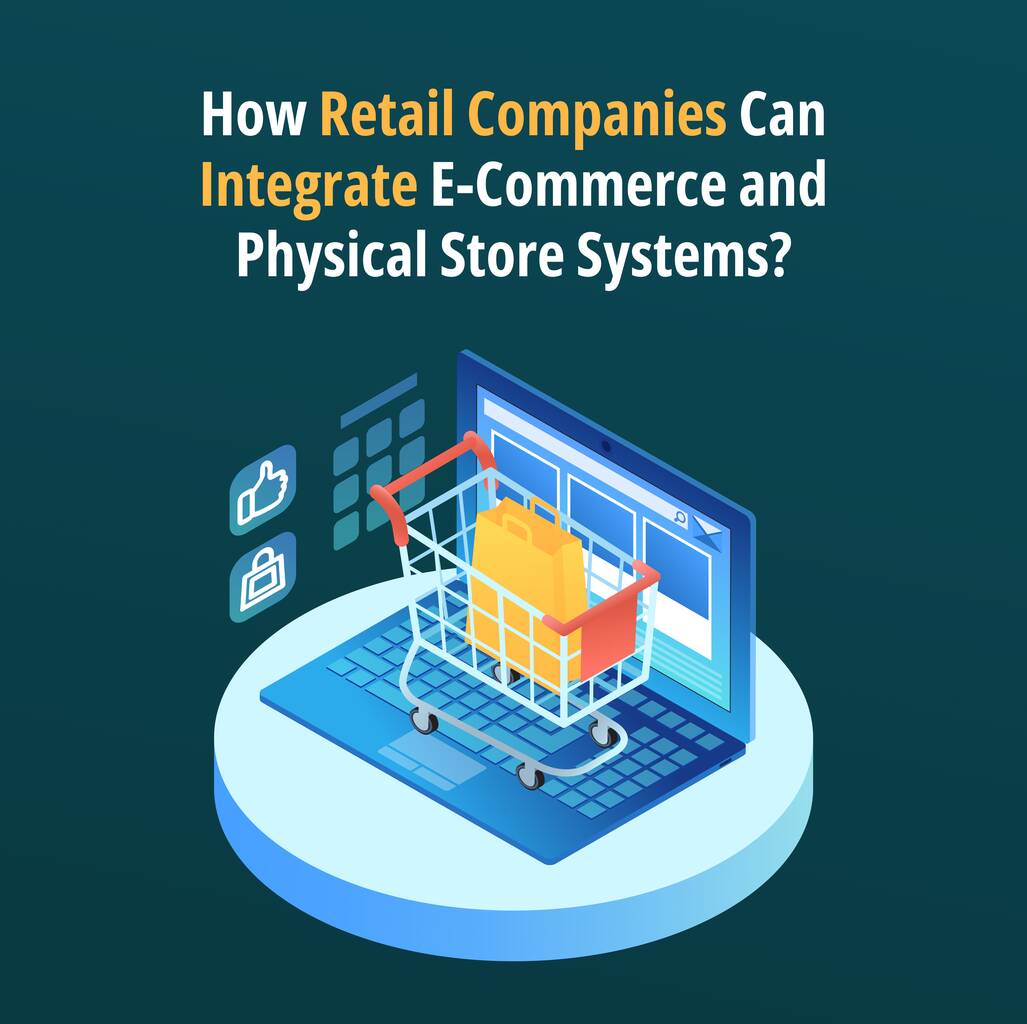
The world is moving towards a digital future, with everything done digitally through the internet. E-commerce has increased, with transactions projected to reach 11.53 trillion in 2024. Does this spell the end of physical stores in the near future? Absolutely not! This is where the integration of e-commerce and physical stores comes into play.
Both e-commerce and physical store integration provide unique benefits among themselves. So why not combine them? Online provides the benefit of the convenience of buying something from the comfort of one’s home. And physical stores allow one to verify a product to be of the quality they are hoping for. Integration helps combine both benefits to deliver a unique experience to customers. These experiences can vary from store to store, but they provide some universal benefits like checking if a product is in stock or has in-store pick-up options. Let us look deeper into what integrated e-commerce is and its features.
What is integrated e-commerce?
Integrated or hybrid e-commerce is a combination of brick-and-mortar stores with online stores. The idea is to provide the benefits of both offline and online services by combining the two. Unified commerce solutions attempt to satisfy both demographics who prefer one or the other. This is a hybrid service that can also provide unique perks not available by any one of the methods by themselves.
How to combine e-commerce and physical store
Combining retail and e-commerce is now in trend as customers frequently purchase online and sometimes prefer in-store pick-up after completing online orders. Most of the retailers are now adopting omnichannel operations in terms of customer demand. Here are the features and processes that will help you to build your unified commerce store.
Unified Commerce
A cross-channel retail solution is one of the main objectives of a combined system. Your products will be available through multiple channels, including but not limited to your physical stores, websites, and social media outlets. Run campaigns to boost your presence on every relevant channel.
Inventory Management System
Combining e-commerce and your on-site store will give you the benefit of a simpler inventory management system. Utilize simple software for your purpose and keep track of every item in your store. Having your inventory of all branches and storehouses under one platform helps expedite your operations and keeps your business running smoothly.
Point-of-Sale (POS) System
The term point-of-sale system was used to refer to cash registers back in the day. Now it is mostly used for online payment services. Online point-of-sale systems are becoming standard nowadays.
According to a study conducted by Forbes Advisor, 70% of individuals prefer card payments with 76% having a preference for businesses that accept card payments. Implement all the popular payment gateways in your area to encourage people. This will also make keeping track of financial transactions easy.
Customer relationship management (CRM)
Information on your customers will be one of the most important assets of your business. Use Customer relationship management (CRM) tools to handle the vast amount of information you will be accumulating over the time of your business. A lot of CRM tools have analysis features that can scan customer data and provide you with insights and trends that can elevate your business.
Order Management System (OMS)
You will need an order management system (OMS) to keep track of all the orders you will be getting. Having a dedicated system means you will be able to manage every order from every platform and handle them accordingly.
Omnichannel Marketing Software
Utilizing multiple platforms can help expand your business in different directions. But no matter how similar your audience might be from different platforms, you will need to make some modifications here and there to take maximum advantage of them. This includes marketing and promotional campaigns.
Omnichannel marketing software can help you run all kinds of campaigns from a single platform. It can be difficult to create and manage so many activities to cater to different demographics. Omnichannel marketing software can automate and manage your marketing efforts with no sweat and help run your business with fewer headaches.
Returns Management System
In order to instill trust among your customers, it is important to implement a solid return policy for them. A returns management system (RMS) is a software that can help you manage product returns. You will always have dissatisfied customers wanting to return your products. An RMS will automate the process and make it easier for your customers to return what they do not want. It can even keep track of necessary information regarding returns, which can be important for collecting feedback and insights regarding unpopular or faulty products.
Benefits of integrated e-Commerce
There are many benefits to e-commerce and physical store integration. Some of these are:
Improved customer service
The synergy provided by combining online and offline retail provides better customer service for everyone. Customers can now contact online support of a brand to ensure that a product is available in-store, and then physically go there and consult representatives for it. This is especially useful for more expensive and rare products as customers are more likely to be hesitant to buy them online without checking the product. This can also ensure that what they are looking for is prepared for them to prevent a trip to the store for nothing if their desired item is not in stock.
Wide audience reach
E-commerce has been growing at a huge rate ever since its inception, with a lot of people believing that it will replace physical stores entirely. However, that will not be the case for a very long time. While the numbers are impressive for e-commerce, they account for about 20% of total retail sales as of 2024 and are projected to rise up to about 23% by 2027.
So instead of focusing on one or the other, one can reach a larger audience by appealing to both the new wave of customers who prefer online shopping and the old-school customers who prefer the old-fashioned ways of shopping for items.
Better inventory management
Hybrid e-commerce can ensure the optimization of retail logistics and smoother day-to-day operations. You can have a holistic understanding of activities that account for everything sold online and offline, allowing you to keep track of everything. In-store inventory visibility online removes a lot of headaches for inventory management. So, most companies are implementing a synchronized inventory management system.
Streamlined operations
By combining online management and various other tools, stores can have a centralized system through which operations take place. As a result, everything can be handled from one place, instead of relying on the communication of different departments. This can streamline operations, making it easier to run the store.
In-store pickup systems
Most people enjoy the convenience of browsing items in a shop on the internet and making necessary comparisons to get the most bang for the buck. However, a lot of these people may feel hesitant to get them online as they may want to demo the product first. This is why a lot of companies have introduced in-store pickup systems where customers can order online the products they want and physically go to the store to pick them up. They can check the products to get their mind at ease and even make changes to products if it doesn’t satisfy them.
Challenges of integrated e-commerce with solutions
While having omnichannel retail systems provides a lot of benefits to both customers and sellers, it can have some challenges that need to be overcome.
High costs
Both online and offline stores have their own set of tools and implementation costs, so it is no surprise that combining these two mediums will have higher costs than usual. The initial high cost can discourage companies from putting out a large sum of money right out the gate.
This is why it is important to spend money wisely and do due diligence on which platforms to invest in. It is generally a good idea to utilize pay-as-you-go models and invest money in methods that work.
Limited expertise
Both online and offline stores require different skill sets that are important to maintain the success of the business. Online stores may need more technical expertise while offline stores need more social knowledge. Running both at the same time means you may need workers skilled in both fields which can be difficult to maintain.
To prevent this from being a problem, implement easy-to-use tools and support into your systems, and have your employees go through a short training program to ensure they can run operations smoothly.
Security
Security will be a concern for both your physical and online stores. A lot of customers can be worried about their personal data being stolen from your site. And theft from your stores will always be a concern no matter what.
Employ a security system in your store and have your websites be encrypted to protect sensitive data of you and your customers.
Popular examples of integrated e-Commerce
Here are a few well-renowned companies that have embraced a hybrid system to enhance their operations.
Nike
Nike is one of the most important sports brands in the world right now, sponsoring some of the most well-known athletes in various sports. They are a great example of a personalized retail experience by utilizing their official app and physical store. Going to their store, you can check out their collection in stock. If you want, you can use the app to check their collection and ask if it is available in their physical branches. There, you can find shoes that perfectly fit.
The unique thing is that their app allows you to fully customize your shoe to whatever design you want. Have a shoe that feels great but the design doesn’t do it for you? Customize to their available options or your own. The final product will be delivered to your doorstep. They also keep mannequins with different clothing combinations. If a customer likes that combination, they can scan the QR code on it with the app and purchase the whole collection (along with the option to make changes and edits). Visiting a Nike store is an experience in itself that encourages people to visit their stores physically.
Rad Power Bikes
Rad Power Bikes is a leading e-bicycle company that started out as an online retailer, directly selling their e-bikes to customers and sending it to their locations. Eventually, they opened up their own brick-and-mortar stores when they had the necessary funds as e-bikes require hands-on experience by customers to make a concrete purchase decision. In their stores, customers can scan their QR codes to schedule services, book bikes, or check out upcoming products and offerings, and make purchase orders.
Indochino
Indochino is a custom clothing brand that started their business online. They would collect measurements from customers and send custom wardrobe pieces. While this seemed convenient, they soon realized that a more hands-on approach was suitable for a business such as this.
Eventually, they established several physical stores to take their service to the next level. Customers would provide their information and measurements online, and go to the store to consult with a style guide. They provide their customers with suggestions that best suit their tastes and wants. Creating a blended retail experience and face-to-face connections with their customers made Indochino a go-to fashion brand for a lot of people.
Integrated e-Commerce platforms
Here are some popular platforms to get you started on your journey.
Shopify
Shopify is currently one of the most popular e-commerce platforms that can help you set up an integrated platform. Shopify provides all kinds of functions such as retail POS, CRM, and ERP integration to provide a seamless customer experience. It is easy to use and recommended by a lot of veterans and entrepreneurs to get you started on your business journey.
Squarespace
Squarespace is a popular website builder that provides all the necessary features to create an e-commerce website that can be used to create an Integrated retail ecosystem. Squarespace is an all-around great tool used by many companies, and if you or your company is involved in building websites, chances are you already have it in your toolkit. Even if you don’t, it is a great choice for converging your online and offline retail chain.
Magento
Magento, now officially known as Adobe Commerce, is a development tool specializing in ERP services. It is a scalable and SEO-friendly tool that can be used to grow your business online. You can also integrate your physical store with your e-commerce sites for an integrated environment. Not to mention, its library of extensions and third-party application support makes it a great choice for you.
Our world is slowly moving towards an online world, where every action will be possible over the internet. However, no matter how convenient the internet might be, it cannot replicate the assurance of hands-on experience with a product, or the connection built by face-to-face communication. Integrating e-commerce and your physical store is a bridge between the two mediums. We hope going through this article will inspire you to adopt a similar approach to your business. If you feel like integrating your business from online to offline or vice versa and need an expert’s opinion on it, feel free to contact us. Our free consultation service can help you make an informed decision and take your business to the next level.
More to Explore
The Quest for Knowledge Continues. Fuel Your Curiosity.