Introduction: The Silent Drain on Your Business Potential
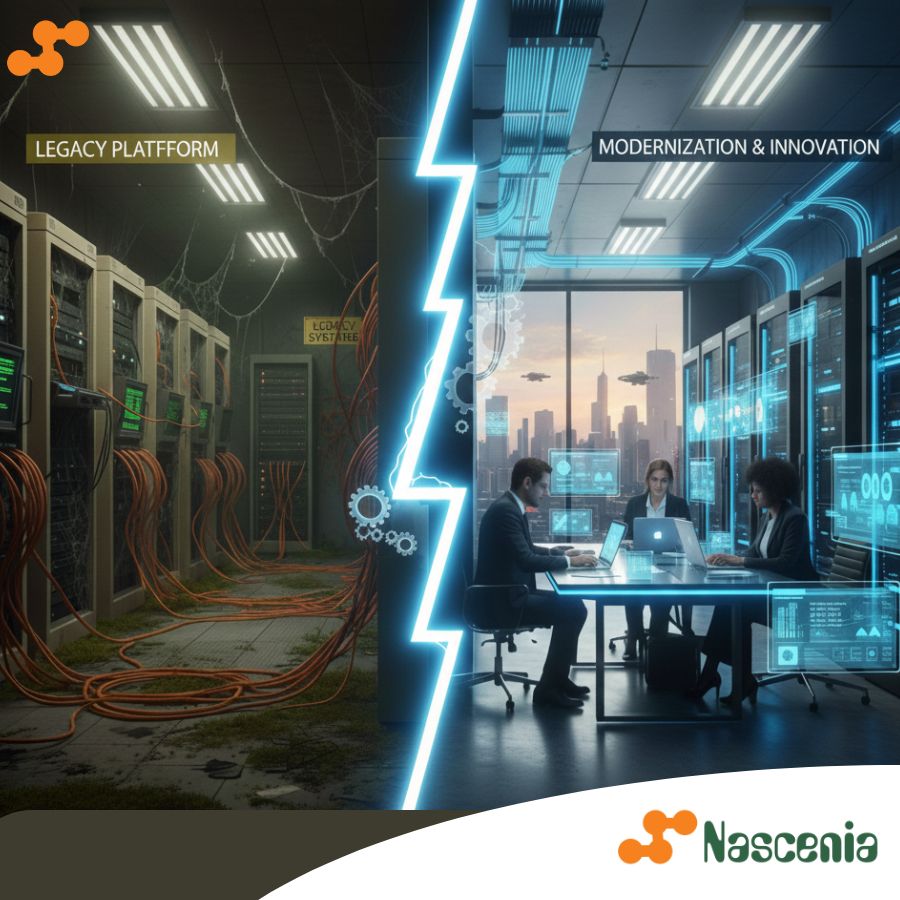
In today’s rapidly evolving digital world, the opportunity costs of legacy platforms are a significant concern. Maybe it’s one of the most significant concerns. Companies stick with the systems they know, the ones that “still work,” and they don’t realise they’re losing money. Numerous are losing potential growth and are not living up to the standards of innovation. And they’re losing their edge against the competition.
The cost of old tech? Big. Businesses spend a considerable amount on maintaining those old systems. Often, between 60% to 80% of their IT budget. The direct financial impact is just the beginning. But the real cost isn’t just maintenance. It’s the opportunities you miss. Competitors are using modern solutions, and they are surging ahead in efficient ways that allow innovation.
Understanding Legacy Platform Opportunity Cost: More Than Just Money
What Defines Legacy Platform Opportunity Cost?
Well, it encompasses every benefit, innovation, and competitive advantage your organisation forfeits by keeping old systems instead of adapting to newer technology. Legacy system modernisation is the procedure of upgrading or transforming outdated, inefficient legacy systems into more contemporary solutions.
Maybe the most significant impact of legacy systems on modernisation is the opportunity costs. By holding on to outdated systems, organisations withhold the advantages the latest technologies present. Technologies that could enhance efficiency, improve customer experiences, and create new revenue streams.
The Multi-Dimensional Impact of Outdated Technology
Legacy systems create a domino effect of missed opportunities across multiple business dimensions:
Financial Opportunity Costs: TechRadar says 60-80% of the IT budget is spent on maintaining legacy apps and on-site hardware. IT teams only have around 20-40% of their total budget for everything else. This resource allocation severely limits investment in growth-driving initiatives.
Innovation Stagnation: A Deloitte survey found that IT departments spend 55% of their budget on maintenance. They only spend 19% on innovation. This imbalance results in a technological debt that accumulates over time.
Competitive Disadvantage: Most businesses are held back in terms of growth and enhanced efficiency due to old or outdated technology, creating a substantial gap between forward-thinking competitors and legacy-dependent organisations.
The Real-World Impact: Quantifying Legacy System Opportunity Costs. How do you put a number on it?
Direct Financial Implications
The financial burden of legacy systems extends far beyond initial estimates. Nearly two-thirds of businesses invest more than $2 million in maintaining and upgrading legacy systems, resources that could drive substantial innovation and growth if redirected.
Hidden Maintenance Costs
The cost of ownership is significantly higher than modern equivalents in terms of ongoing maintenance, loss of efficiency, loss of productivity and opportunity cost. These hidden expenses accumulate rapidly, creating significant financial drains.
Productivity and Efficiency Losses
Outdated models of service provision are creating service bottlenecks that drive downstream workforce productivity into the ground. So in addition to lower efficiency, legacy also becomes a reflection of employees’ and customers’ perception of your brand race: you are slow because you are old, literally.
Training employees for old software: Training your staff for the legacy software will become a cumbersome task, hampering their efficiency, as human resources and time can be invested in something more strategic.
Problems with retaining talent: Old systems are also a factor in talent turnover, as software professionals want to be on cutting-edge, powerful technologies.
Strategic Modernisation: Breaking Free from Legacy Limitations
Business-Driven Modernisation Approaches
Successful legacy platform transformation requires strategic alignment with business objectives. Three of these drivers come from a business perspective — business fit, business value and agility. If the legacy application is not meeting the new requirements imposed by digital business, it needs to be modernised to serve properly, and should be upgraded to provide greater business value.
Modern Approaches Include:
- Lift and Shift Migration: Moving existing applications to cloud infrastructure
- Application Replatforming: Upgrading underlying platforms while maintaining core functionality
- Complete Re-architecting: Rebuilding applications with modern architectures
- Hybrid Modernisation: Combining multiple approaches for optimal results
AI-Powered Transformation Strategies
A recent survey by IDC, conducted in January 2024, shows that 23% of organisations are now directing their budgets towards GenAI projects. This trend reflects the growing recognition of artificial intelligence as a catalyst for legacy system modernisation.
Modern businesses are leveraging AI to accelerate transformation processes, automate migration tasks and optimise new system architectures for maximising efficiency and scalability.
Technical Debt: The Compounding Crisis
Understanding Technical Debt Impact
Nearly 80% say technical debt caused cancellation of business-critical projects and organisational paralysis, delayed innovation, and increased costs. And more than 9 in 10, so 92% of respondents, said their organisations struggle with some form of technical debt. This phenomenon is quite prevalent.
Technical Debt Manifestations:
- System Inflexibility: Legacy systems are industry-wide and most often the core of business operations. While these systems are reliable, they may become inflexible, sluggish, and incompatible with new technologies. This has the impact of driving up maintenance expenses and losing the innovation potential.
- Integration Challenges: New services and APIs struggle to integrate with legacy architectures.
- Security Vulnerabilities: Old systems don’t offer the latest security protocols and patches. Big issue.
- Scalability Limitations: Previous platforms cannot handle modern data volumes and user loads.
Industry-Specific Opportunity Cost Analysis
Healthcare Sector Impacts
Health organisations must address the following risks associated with legacy medical systems:
- Patient information available in real time: Legacy systems prevent access to important patient information. And that’s not good for patient care.
- Regulatory Compliance: The modern environment in healthcare is demanding, and regulations are stringent- capabilities that legacy systems simply cannot offer.
- Interoperability challenges: Old devices find it difficult to interact with new medical equipment and other supplier systems. They simply don’t speak to each other.
Financial Services Consequences
Financial institutions encounter specific legacy-related opportunity costs:
- Digital Banking Limitations: Customer expectations for mobile and online services exceed legacy system capabilities. People want to do everything on their phones.
- Risk Management Deficiencies: Modern risk assessment tools require real-time data processing that legacy systems cannot deliver.
- Regulatory Reporting: Compliance requirements demand automated reporting capabilities beyond legacy system reach.
Manufacturing Operations Impact
Manufacturing companies face operational challenges, including:
- Supply Chain Visibility: Legacy systems cannot provide real-time supply chain insights essential for modern operations.
- IoT Integration: Smart manufacturing requires connectivity that legacy platforms cannot support.
- Predictive Maintenance: Modern analytics for equipment optimisation are impossible with outdated data systems.
ROI of Legacy Modernisation: Calculating the Benefits
Quantifiable Return Metrics
Organisations successfully modernising legacy systems report significant returns:
- Cost Reduction: Businesses avoided more than $80,000 annually in costs tied to legacy software and third-party systems. That’s a lot of money.
- Operational Efficiency: Modern systems enable faster decision-making and improved reporting capabilities.
- Scalability Benefits: Cloud-based solutions provide unlimited growth potential without infrastructure constraints.
Strategic Advantages
- Enhanced Agility: Modern platforms enable rapid response to market changes and customer demands.
- Innovation Acceleration: Resources freed from maintenance can focus on competitive advantage development.
- Customer Experience: Updated systems provide superior user experiences that drive customer satisfaction and retention.
Implementation Roadmap: Your Path to Modernisation Success
Phase 1: Planning and Evaluation (Months 1–2)
- Thorough System Audit: List every legacy component along with the business impact it has. The goal is to determine what is outdated and the costs associated with it.
- Cost-Benefit Evaluation: Compare the current opportunity costs to the investments in modernisation. What do we lose by continuing with the status quo?
- Stakeholder Coherence: Obtain departmental and executive support for transformation projects. Get everyone on board. That’s crucial.
Phase 2 (Months 3–4): Strategic Design
- Architecture Planning: Create cutting-edge system architectures that complement corporate objectives. Create a new system that genuinely benefits us.
- Technology Selection: Pick tools and platforms that will yield the most long-term benefits. Choosing the appropriate tools is important.
- Migration Strategy: To minimise business disruption, create phased implementation plans. How can we make the transition without causing any damage?
Phase 3: Testing and Implementation (Months 5-8)
- Pilot Initiatives: Use non-critical systems to test modernisation strategies. First, give it a try on something modest.
- Data Migration: Move important company data to new platforms securely. Keep the important things close at hand.
- User training: Get teams ready to optimise and adopt new systems. Educate people on the new system.
Phase 4 (Months 9–12): Optimisation and Scaling
- Performance Monitoring: Monitor metrics related to user satisfaction and system performance. Check to see if it is effective and well-liked.
- Continuous Improvement: Adjust procedures in light of actual usage data. As we proceed, make it better.
- Complete Deployment: Expand effective pilots throughout the entire company. Spread the word to everyone.
Future-Proofing Your Technology Investment
Incorporating New Technologies
New technologies should integrate with contemporary systems, such as:
- Artificial Intelligence: Businesses can leverage advanced analytics and automation across multiple areas thanks to AI-enabled frameworks.
- Internet of Things (IoT): Modern devices require advanced connectivity protocols for inter-device communication.
- Edge Computing: Rigid system architectures can impede distributed processing capability.
- Systems with distributed processing capability require system architecture flexibility.
Continuous Modernisation Strategy
Implementing changes to ensure ongoing modernisation is essential:
- Scheduled Technology Assessments: Scheduling assessments every quarter ensures technologies are current.
- Changeable Structure: Modular systems enable partial upgrades without a complete overhaul.
- Partnering with a vendor: Ensured access to up-to-date technologies is made possible with strategic vendor partnerships.
Conclusion: Transform Today or Fall Behind Tomorrow
Maintaining a dated platform comes with an extra hidden cost—loss of business opportunities, or opportunity cost, which far exceeds the minimum expenditure alongside its simple upkeep costs. With every second a business decides to delay upgrading its system, customers get angrier, the competition grows, and a business’s resources are misallocated towards useless systems. Everything becomes more complex, and cash flow is the least of a business’s worries.
Modernising a legacy platform is a business’s more strategic spend, and embracing stagnation is a simpler, yet more dangerous option. With every business that chooses to act first, they are bound to have a longer sustained growth trajectory, more efficient operational performance, and better stimulate creativity and agility software with a shift towards decades-old spending approaches.
This is a more business strategic approach, and therefore, thinking about whether you are capable of affording to spend cash modernising is a useless luxury. In our technological landscape, the decisions taken today will have an impact on the future and legacy systems. If nothing is done, there will always be lost opportunities that keep on rising, and besides, legacy systems just add fuel to the fire.
Eager to overcome the boundaries defined by legacy systems? Contact us now as Transformations always seem daunting—but the first step is to reach out. Outdated competition will never beat a business that is proactive now, and there will always be a business to modernise devices and garner a competitive edge upon reaching the pinnacle of technological prowess and business flow.
More to Explore
The Quest for Knowledge Continues. Fuel Your Curiosity.